What factors will affect the price of a 5-inch LCD screen?
Date:2026-01-21
What factors will affect the price of a 5-inch LCD screen?
The price of a 5-inch LCD screen ranges from tens to hundreds of yuan, mainly influenced by three major factors: product specifications, market and supply, and procurement and service. The specific differences are shown in the table below:
Category of influencing factors | Specific factors | Explanation and typical examples of the impact on prices |
Product specifications and technology | Resolution | The higher the resolution, the higher the cost. For example, the price of a 1080p screen will be significantly higher than that of a 480p screen |
Display technology | IPS screens have a wide viewing angle, good color, and are priced higher than TN screens with basic technology |
Brightness and contrast | High brightness (such as over 500 nits) and high contrast screens will drive up costs |
Touch function | Adding touch functionality will increase costs, as capacitive touch is usually more expensive than resistive touch |
Environmental adaptability | Supporting industrial features such as wide temperature range (e.g. -30 ℃~80 ℃), waterproof and dustproof, will significantly increase the price |
Market and Supply Chain | Brand and Original Factory | The glass panel prices of well-known brands such as BOE, AU, Tianma, etc. are usually higher than other brands |
Core material cost | The price fluctuations of raw materials such as driver ICs (with a large price difference between imported and domestic products), glass substrates, and backlight LEDs directly affect screen prices |
Market supply and demand and cutting efficiency | The supply and demand relationship of the entire panel industry (such as the high demand for consumer electronics pushing up prices across the industry) and the cutting economy of 5-inch non-standard sizes will both affect the final pricing. |
Procurement and customization services | Purchase Quantity | Bulk procurement can significantly reduce unit prices. A case study shows that increasing the order quantity from 500 pieces to 50000 pieces can reduce the unit price by 5% |
degree of customization | The standard product has the lowest price. Any customization requirements, such as modifying the appearance, interface, special brightness, or temperature width, will increase development and material costs |
Supply chain services | The technical development support, quality assurance, and long-term supply capability provided by suppliers will also be reflected in the price. |
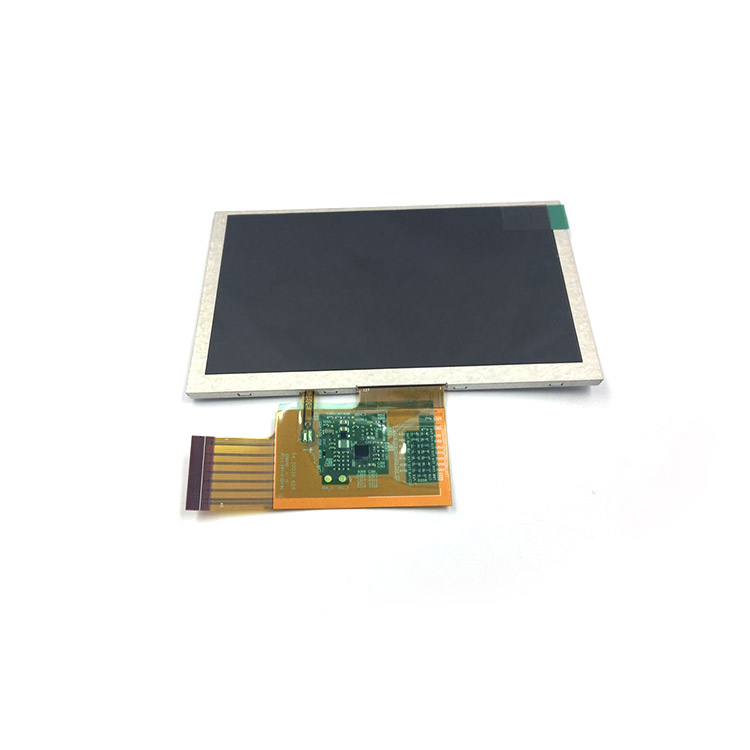
Selection and Cost Control Suggestions
1. Choose specifications as needed to avoid excessive functionality
For example, for conventional indoor industrial control equipment, a model with a brightness of 250-300 nits and a normal operating temperature can be selected.
Unless necessary, carefully choose high-end specifications such as ultra wide temperature and ultra high brightness.
2. Prioritize the use of standard products
Try to choose existing standard models from suppliers. Using the "public mold" size can save mold costs.
For the maintenance of old devices, the compatibility of special interfaces may be more important than the price of the screen itself.
3. Optimize procurement strategy
R&D stage: Purchase small batches of samples from e-commerce platforms or agents, and the unit price may be higher.
Mass production stage: directly contact the original factory or large module suppliers to obtain competitive bulk quotations with clear annual demand.
If you can provide more specific application scenarios (such as for outdoor handheld terminals or indoor control panels) and key parameter requirements (such as the minimum brightness or temperature range that must be met), I can provide you with more targeted analysis.
TIANMA 5-inch LCD screen:https://www.auo-lcd.com/products/tianma/5inch//
AUO 5-inch LCD screen:https://www.auo-lcd.com/products/auo-lcd-screen/5inch/